
Fashion
SuperBottoms enters offline retail;

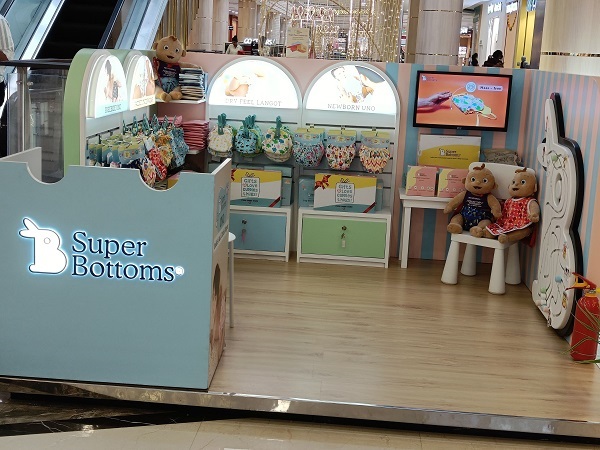
SuperBottoms enters offline retail; Targets Annual Revenue of 250 cr by FY26
SuperBottoms, India’s leading D2C brand for eco-friendly baby-care products that recently raised USD 3 million, today announces their foray into offline retail business. Founded in 2016 by Pallavi Utagi, SuperBottomshas grown 2X YOY in the last 4 years.
The brand has opened its first kiosk in Mumbai at Rcity Mall Ghatkopar with the objective of building brand distribution as well as visibility. The kiosks display and sell products across its major categories – UNO cloth diapers, Dry Feel Langot, and Potty Training Pants. Along with this, SuperBottoms plans to open 6 kiosks targeting west and north zones by the end of this financial year, while parallelly building a team for General Trade outlets for their other products such as Langots, Underwear, and reusable menstrual hygiene products

Commenting on the expansion into offline retail, Pallavi Utagi, Founder & CEO, SuperBottoms said, “SuperBottoms is on a mission to build cloth diapers in India, which will need parents to learn a completely new cloth diapering concept. And, when it comes to their children, parents have a lot of concerns and questions. Having an offline presence allows parents to feel and touch the product and experience it for themselves before purchasing it. On the business front, India is still a highly offline-oriented market, and if we want to truly develop the category and get it to all the parents in India, going offline is a major lever. Our first kiosk that began in October 2022 has seen phenomenal love and it gives us a lot of motivation to build this network stronger and faster.”
Speaking about the offline expansion, Vinod Khedekar, Chief Operating Officer, SuperBottoms said, “We’re thrilled to foray into offline retail with the launch of our first kiosk, creating a holistic phygital experience for SuperBottoms consumers. For a purpose-led brand like SuperBottoms, venturing to the offline channel will boost awareness and help attain scale via reaching a larger audience on-ground beyond digital. With this we see SuperBottoms reach its next growth phase. With well-trained staff who will assist customers in facilitating convenient shopping, offline stores will ensure that our offerings align with our consumers’ needs and wants”.
Revolutionizing the personal and baby care market with innovative products has been possible by keeping research close but customers closer. Being a consumer-first brand, In 2016 SuperBottoms came up with a community- The Parent Tribe, as a platform to resolve cloth diapering queries for its customers. Now over 75,000 parents strong, Tribe has grown and transformed into an authentic platform of organic reviews, honest feedback, and an interactive community. It has not only been a fundamental source of research and development but their positive word of mouth spreads awareness about cloth diapering thus contributing towards the sales as well. Over and above the products, to create value for our ever-growing community, Tribe is studded with a panel of experts who assist parents with all queries ranging from cloth diapering to breastfeeding to nutrition. SuperBottoms is aiming to grow the community to 1 Lakh parents by the end of this year.
About SuperBottoms
Founded in 2016 by Pallavi Utagi, SuperBottoms is an online-first sustainable brand of reusable cloth diapers and baby products focused on awareness and increased adoption of reusable cloth diapers in India besides the daily needs of babies & toddlers. Run by a core team of parents, 90% of whom are mothers, it’s trusted by 20 lakh+ parents. SuperBottoms UNO, its flagship product is an organic reusable diaper with the capability to stay dry all night. Made with pure cotton, it is very gentle and safe on the baby’s delicate skin. With one-size-fits-all functionality, it has a patent pending for its innovative buttoning system that enables the same diaper to be used for babies up to 3 years. A leader in the cloth diaper category in India, it’s also a bestseller on marketplaces like Amazon India.













CROISETTE CHRONICLES — PART II
“Sun, Silk & Studied Chaos”
If the first week of Cannes 2026 whispered, the second week grabbed you by the collar.
A blush-pink strapless column gown arrived on the Croisette with the kind of quiet ferocity only a seasoned red carpet can absorb. Pearl-scattered at the bust, its satin surface caught every camera flash. It was paired with a voluminous silver-grey cocoon coat draped off both shoulders — not worn, deployed. Chandelier diamonds framed the ears, stacked rings adorned both hands, and sleekly pulled-back hair revealed a razor-sharp jawline. This was old Hollywood reconstructed by someone who found the original too polite.
Then came the moment that stopped the Croisette mid-scroll: a chartreuse pleated one-shoulder gown, its fabric engineered into deep diagonal ridges sweeping from a sculpted shoulder down to a dramatic thigh-high slit. Photographed against palm trees and Mediterranean light, it looked less like an outfit and more like a natural phenomenon — moss-coloured, elemental, inevitable. A single emerald pendant rested at the throat. Loose waves, barely tamed, completed the look. The overall effect? A woman who dressed for the landscape, not the photographers — and somehow captivated both.
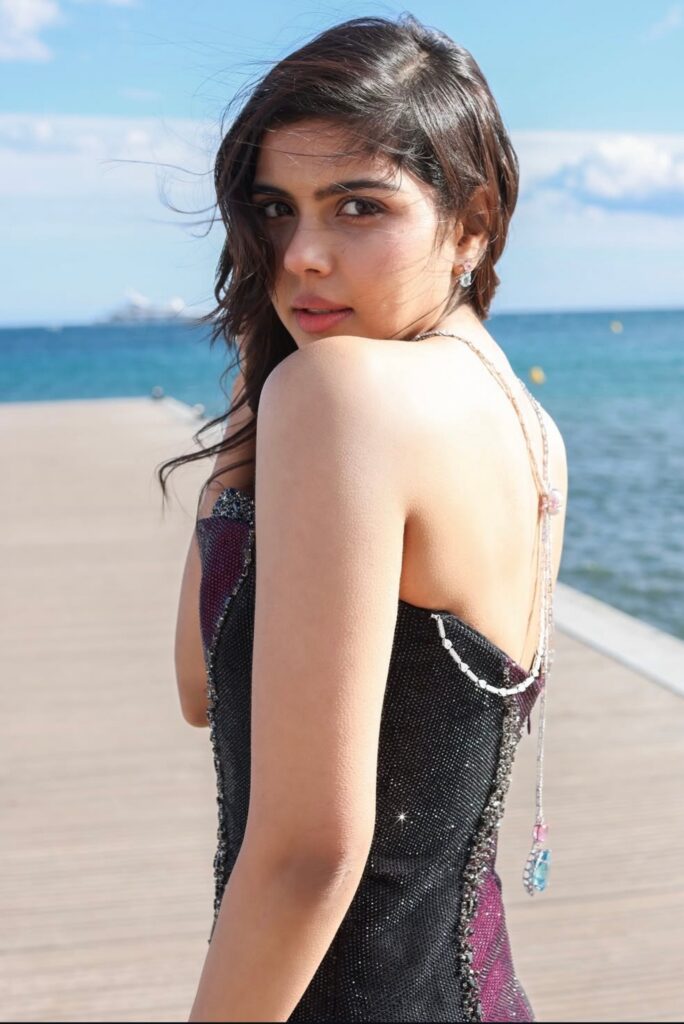
Beside the sea, another story unfolded. A dark sequinned gown — midnight black fading into deep magenta — was worn against the backdrop of open water. Hair loosened by the wind, a glance thrown back over one bare shoulder. Delicate crystal chains descended the open back like jewellery transformed into architecture. No carpet, no crowd. Just Riviera light and the confidence to command it entirely.

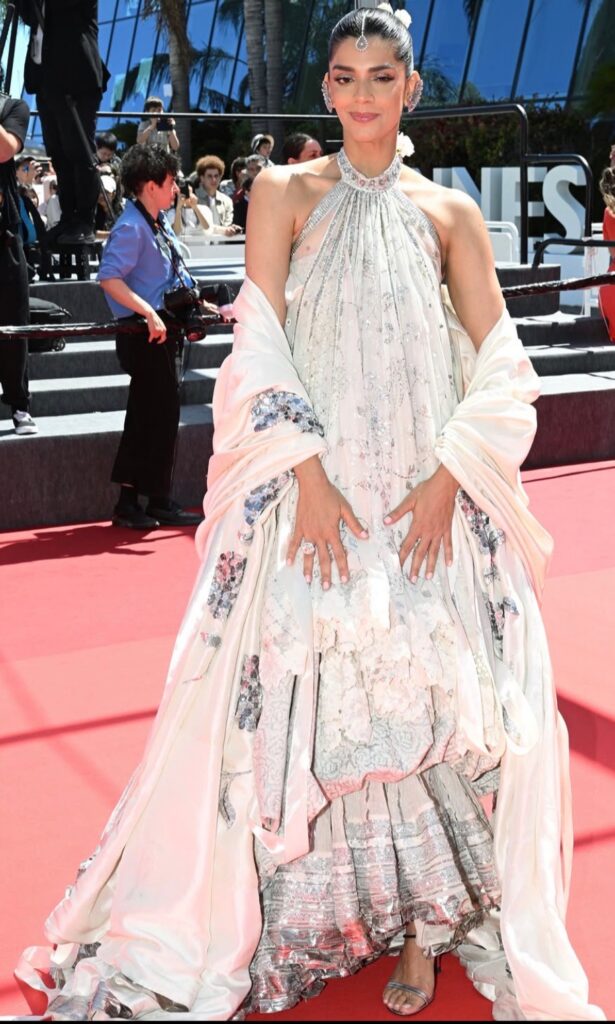
Then came the cultural statement that deserved its own paragraph: a halter-neck anarkali of extraordinary intricacy. Silver and blush floral embroidery spread across ivory silk, while a heavily diamond-encrusted halter neckline functioned as both collar and jewel. A maang tikka and oversized jhumkas completed a look worthy of museum display. A blush dupatta trailed behind with quiet drama. This was Indian couture presented not as a translation for a Western audience, but entirely on its own terms — unapologetic, uncompromising, and self-assured.
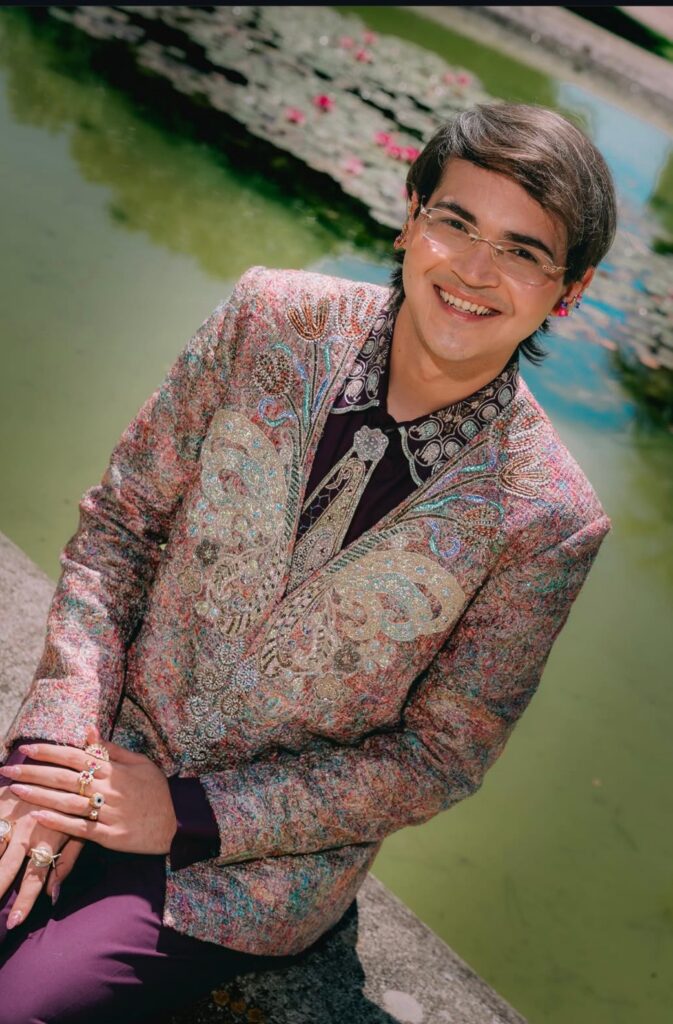
Finally, there was the fashion commentator who became the story. A multicoloured embroidered bandhgala blazer — alive with iridescent threadwork in mauve, teal, and gold — was paired with plum trousers and a galaxy of statement rings. Frameless glasses added restraint to the visual richness, while the smile carried a different message altogether: I dressed for myself first. At Cannes, where everyone performs for someone, that may be the most radical statement of all.
“The Riviera didn’t dress them. They dressed the Riviera.”
Events
Fashion Designer Amit GT and Le Marquise Jewellery by Jasmine Gulati Jain and Sambhav Jain Showcase Excellence Under the Golden Lumière Awards at the 79th Festival de Cannes 2026 Show Directed by Liza Varma

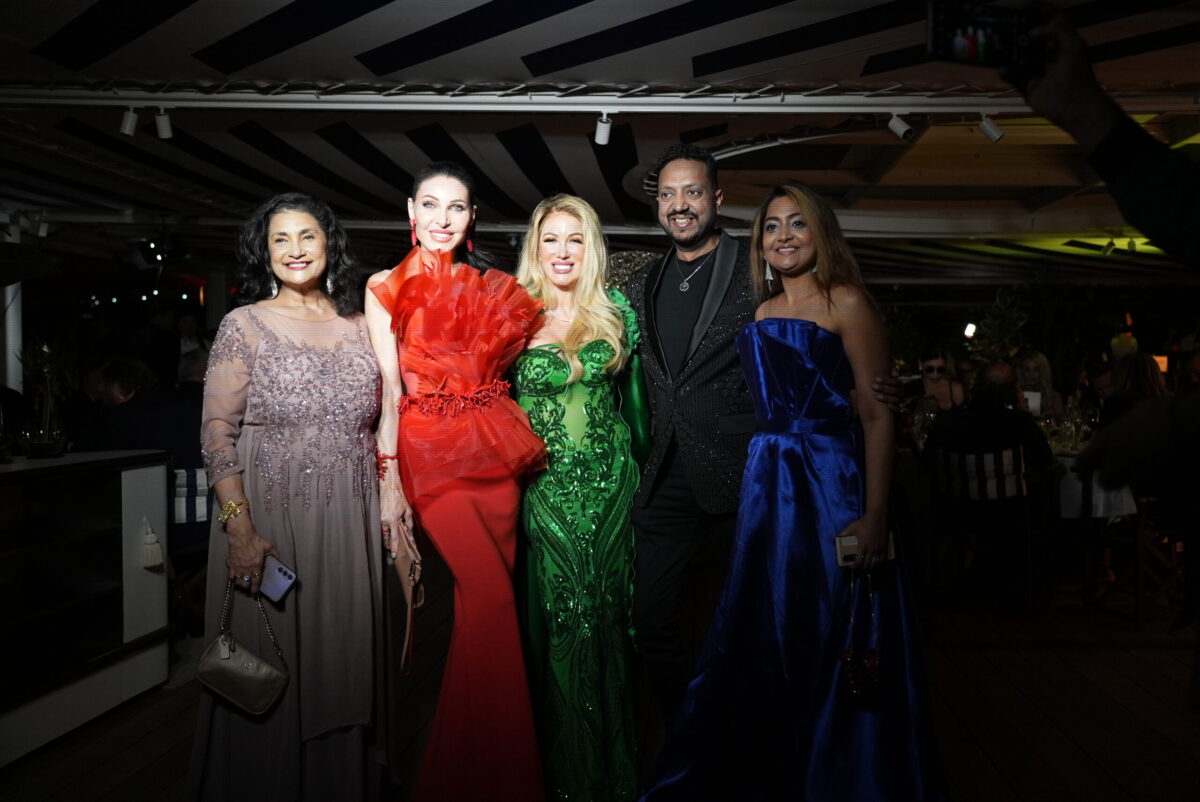
As part of India’s multi-platform presence at the 79th Festival de Cannes 2026, internationally renowned Show Director Liza Varma from India led a delegation of Indian designers and jewellery labels at the Fashion TV Presentation held on 18th May 2026 at the Majestic Hotel, Cannes, at 9:30 PM (CEST).
The showcase featured celebrated Indian designer Amit GT along with Le Marquise Jewellery by Jasmine Gulati Jain and Sambhav Jain, presenting a curated display of fashion and jewellery that reflected contemporary Indian design sensibilities on an international platform. Amit GT’s showcase was presented under the prestigious Golden Lumière Awards Cannes 2026, hosted at the Majestic Hotel Beach, Cannes.
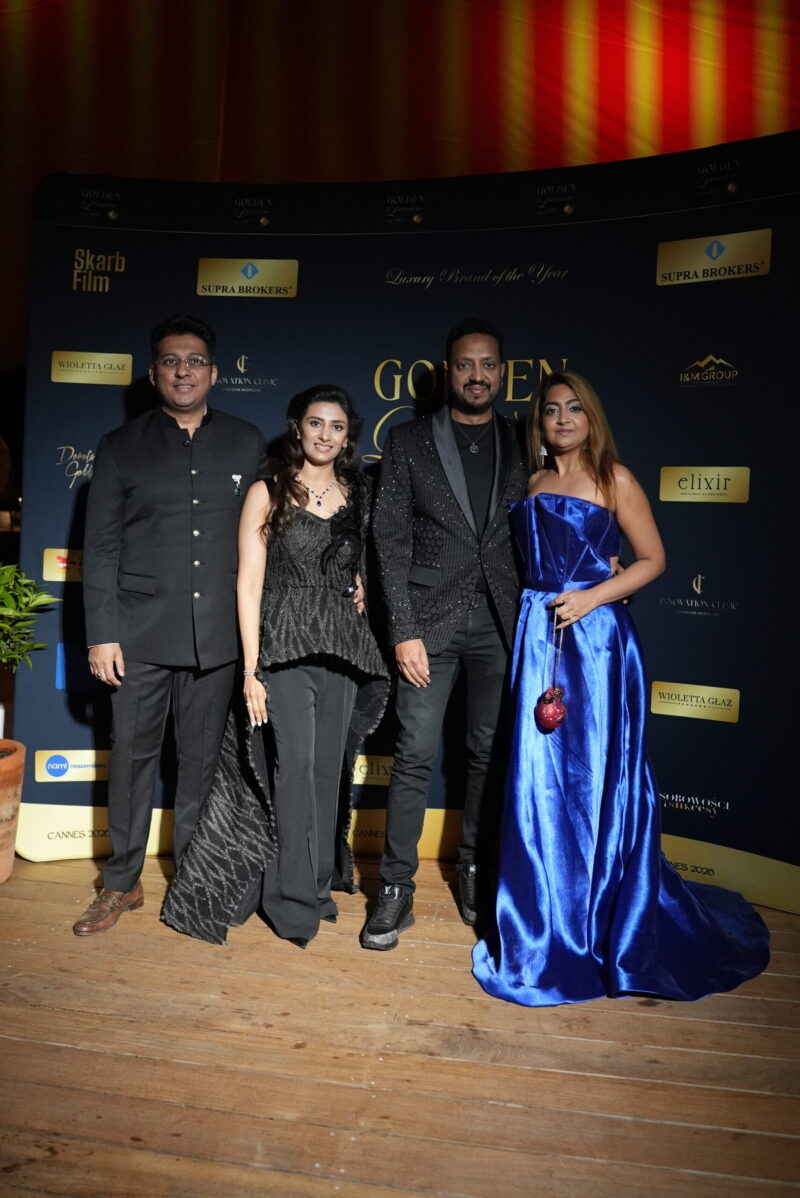
The Golden Lumière Awards show is hosted at the Majestic Hotel Beach, Cannes2026, where cinema meets luxury, celebrating outstanding personalities from international cinema along with visionary business leaders supporting art, culture, cinema, and the future generation of creators. The grand evening was attended by international personality Farhana Bodi and actress Urvashi Rautela, while actress Pooja Batra. The event was produced by Anna Neneman from ENW Showroom.

Speaking about the showcase, Liza Varma said, “My focus is to create opportunities for Indian designers and talent to present their work in international environments. Cannes provides an important global platform to showcase the strength of Indian fashion, craftsmanship, and creative talent before an international audience.”
Held alongside the 79th edition of the Cannes Film Festival 2026, the presentation formed part of a larger initiative led by Liza Varma to create global visibility for Indian designers, jewellery labels, and creative talent through curated showcases and international collaborations at Cannes.

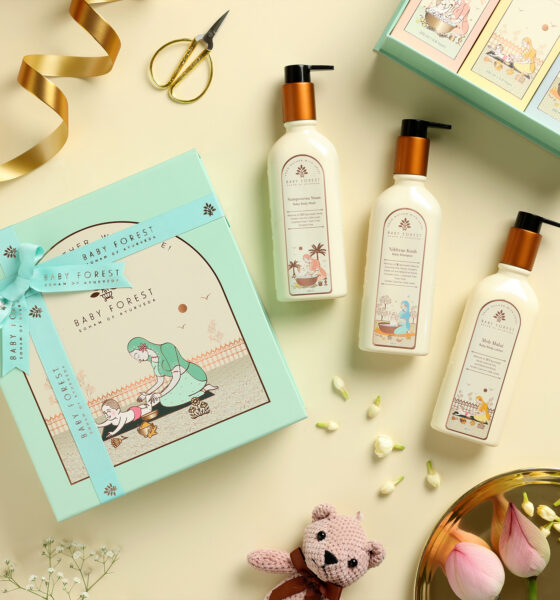
Baby Forest Maasoom Petika: A Thoughtful Ayurvedic Baby Care Gift for First Raksha Bandhan

Birla Cellulose’s Handloom Initiative Brings New Possibilities for Traditional Weaving

EAW Global Aqua Expo 2026 Inaugurated at Bharat Mandapam; Water Leaders Convene to Shape India’s Water Future






An Evening of Healing, Hope, and Humanity: The Healing Brush Unveiled at Delhi Golf Club

Meltdown Proof: How to Protect Your Skin from India’s Ultimate Summer

Baby Care Essentials Every Parent Needs This Summer

Star-Studded Premiere of Bharat Bhagya Vidhat

Beyond Silence: A Smarter Way to Meditate

Masters of the Universe Review: A Triumphant Return to Eternia

 Events8 years ago
Vandy Mehra & Dr. Sanjana Jon hosted a fashionable evening

 Celebrities2 years ago
VOGUE EYEWEAR UNVEILS ‘KEEP PLAYING’, AN EFFERVESCENT CAMPAIGN WITH BRAND AMBASSADOR
 Lifestyle2 years ago
Aza Fashions Launches Flagship Store in Dhan Mill, New Delhi

 Celebrities2 years ago
Sony AATH is premiering the 4th Gopal Bhar movie titled ‘Gopaler Buddhi

 Business9 years ago
Uber and Lyft are finally available in all of New York State

 Health & Beauty2 years ago
The Face Shop Unveils the Vitamin Lip Sleeping Mask: A Revolution in Lip Care

 Celebrities2 years ago
Appu gives meaningful message in country’s first 4K animated

 Lifestyle2 years ago
2025 Numerology Predictions by Tarot Reader Sangeeta Walia