
Events
Awakening the Divine: Exploring the Essence of Hindu Poojas


Hindu prayer (puja) is an effective means of cultivating action, devotion, knowledge, and focus. Click on any pooja that interests you for more details of what materials will be necessary.
Hindu festivals follow the lunar-solar calendar. Masa is a lunar month, while paksha and tithi represent lunar fortnights and days respectively.
Tulsi Pujan Diwas
Tulsi Pujan Diwas, also known as Holy Basil Day, is an important Hindu festival honoring spirituality, nature, and cultural heritage. This day-long event involves elaborate rituals and ceremonies intended to sanctify the Tulsi plant and invoke goddess Tulsi and Lord Vishnu’s blessings – such as circumambulating it seven times while reciting mantras or prayers; devotees also light diyas around its base in order to bring an atmosphere of positivity.
Tulsi Pujan Diwas finds its roots in the legendary tale of Vrinda, wife of demon king Jalandhar. According to this tale, Jalandhar became invincible thanks to Vrinda’s purity and devotion; so gods asked Lord Vishnu for help to end Jalandhar’s reign; to do this he used trickery against Vrinda which resulted in him violating her vow of chastity which ultimately resulted in demon’s defeat remorsefully Lord Vishnu transformed her into Tulsi plant!
Naga Panchami
Naga Panchami is an annual Hindu festival commemorating snake and serpent deities. Held annually during the July-August lunar month Shravana (July-August), rituals and offerings performed on this day aim to appease these deities and gain their blessing for health, wealth, and prosperity.
This day is also significant astrologically, as it marks the conjunction of Rahu and Ketu – shadow planets that represent serpentine energy in Vedic Astrology – which can cause sickness, poverty, and misfortune in one’s life. Thus this puja serves as an effective way of dispelling their harmful influences.
Hindu mythology considers snakes (nagas) holy because of their connection to Brahma, Vishnu, and Mahesh – Brahma sleeping on Shesha while Shiva keeping Vasuki on his neck is further evidence. Furthermore, providing milk offerings to snakes may protect one against snake bites that cause deaths globally; many cultures believe offering milk to these reptiles provides protection.
Raksha Bandhan
Raksha Bandhan (or “the knot of protection”) marks an annual festival to honor and strengthen brother-sister bonds. Held during full moon day in the Shravana month of the Hindu lunar calendar, sisters tie rakhi bracelets around their brother’s wrists as a gesture of love and protection; brothers pledge their devotion by donning one themselves. This promise stems from Draupadi who tied a piece of her saree around Lord Krishna’s cut finger to stop its bleeding; Krishna then promised his protection by promising his lifelong devotion vowed always to protect her in return vowed his lifelong devotion vowed protection upon her actions vowed that Draupadi would always protect him – thus renewing this promise!
Raksha Bandhan begins by creating a small pooja thali filled with an oil lamp (diya), vermilion powder (roli), rice, sweets, and rakhi. Sisters then perform an aarti before their brothers by gently waving the lamp and dotting their foreheads with vermilion powder before gently tying rakhi around their wrists offering prayers for health and success as gifts are exchanged between brothers and sisters.
Deepavali
Puja is an integral component of Hindu worship that helps convey devotion while upholding cultural traditions and rituals. From simple prayer services led by individual worshippers to elaborate ceremonies performed with Brahmin priests, puja provides an avenue for Hindus to show their reverence for one another and their beliefs.
Pooja typically involves worshipping an image or icon of a deity, called murtis, as a focal point for meditation and prayer. These murtis can take many forms: three-dimensional carving or sculpture, photo, flat engraving (bimba) or painting are just some examples. Sometimes, however, puja utensils also serve double duty by being used for cooking food service or serving up dessert – or be used solely as decorative objects such as flowers, fruits and sweets!
Hindu rituals typically occur at temples or shrines; however, online puja is becoming increasingly common among Hindus. Some have claimed that online puja can democratize worship by making it possible for women, low-caste individuals, non-Indians, and others unable to travel physically to attend in person to still make offerings; others argue that companies supporting these services still impose limitations on who can offer what to which image.
Bhai Dooj
Pooja, or worship services in Hinduism, are an integral component of worshipping deities and allow devotees to express their devotion, seek blessings, and deepen their spiritual bond with the divine. Puja services usually take place in a special room dedicated to the god or goddess being honored and can include lighting incense sticks and ringing brass bells; or applying blood-red vermillion paste or “kumkum” directly onto an image being worshipped.
Bhai Dooj, also known as Bhau Beej and Bhrathri Dwitiya is the final day of Diwali festivities and celebrates the special relationships among siblings. This year it will take place on November 3rd.
This festival takes its name from an ancient legend about Lord Krishna’s sister Subhadra who received him with love and devotion before promising him protection in return. As an act of gratitude to this promise, sisters smudge vermilion onto their brothers’ foreheads and perform an Aarti together; furthermore, they give gifts and pray for their well-being – this ritual celebrates sibling love while strengthening family ties.



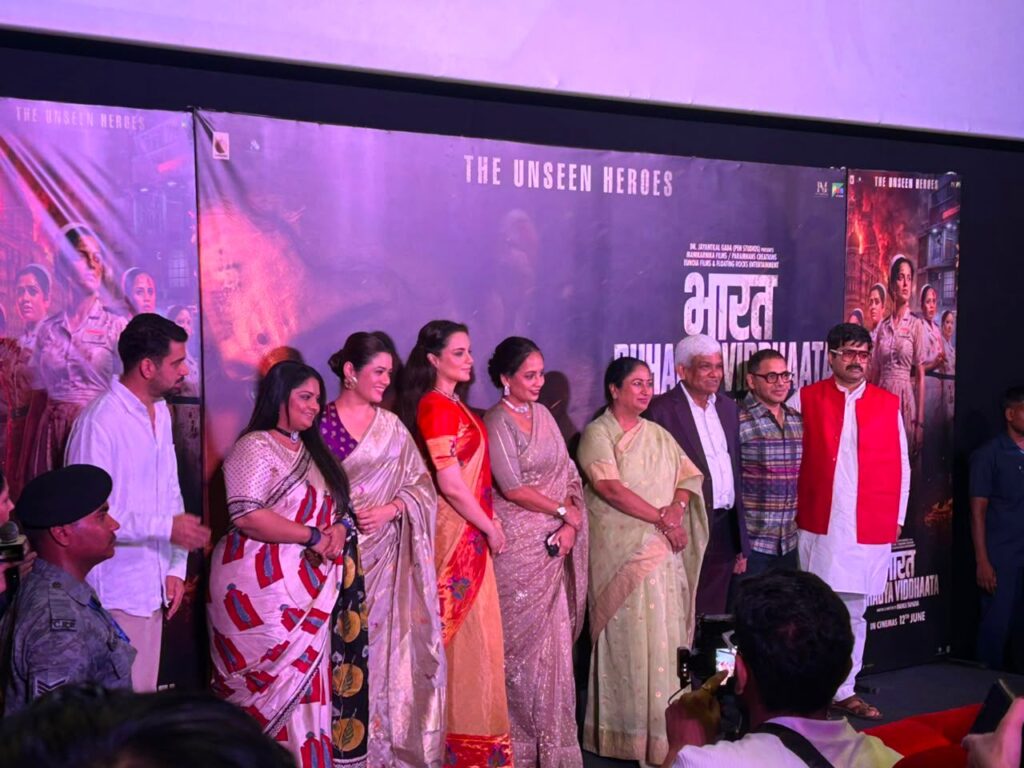
Written and directed by Manoj Tapadia and presented by PEN Studios in association with Manikarnika Films, Bharat Bhagya Vidhata is scheduled for theatrical release on June 12, 2026. Inspired by true events during the horrific 2008 Mumbai terror attacks, the film shifts attention away from conventional depictions of tragedy and instead illuminates the extraordinary actions of ordinary individuals working within Mumbai’s Cama Hospital. At its heart lies a powerful tribute to nurses, ward boys, security personnel, and hospital staff whose bravery ensured the safety of hundreds of patients during one of India’s darkest nights.

Kangana Ranaut leads the film as a senior nurse inspired by the real-life heroism of Anjali Kulthe, delivering a performance rooted in determination and quiet strength. Supporting her is an accomplished ensemble featuring Girija Oak, Smita Tambe, Amrutha Namdev, Esha Dey, Suhita Thatte, and several others, each contributing meaningfully to a narrative that intentionally avoids portraying heroism as the achievement of a single individual. Instead, the film emphasises collective courage, illustrating how every member of the hospital staff became an indispensable part of a larger effort to protect vulnerable lives.

Without venturing into spoiler territory, Bharat Bhagya Vidhata succeeds in immersing viewers in the tension and uncertainty of the situation. The screenplay maintains a commendable pace, ensuring that the emotional weight never overwhelms the narrative momentum. More importantly, the film serves as a timely reminder of the often-unrecognised contributions of nursing staff and hospital attendants. In moments of catastrophe, while doctors shoulder immense responsibility in critical care and decision-making, nurses and support workers are the constant presence, managing countless essential tasks that keep an institution functioning.
Beyond the screening itself, the premiere offered valuable insights into the filmmaking process. The evening was marked by a lively atmosphere, with extensive media interactions, cast interviews, and behind-the-scenes discussions. Members of the cast and crew shared their experiences portraying real-life events, the challenges of balancing historical sensitivity with cinematic storytelling, and the responsibility of representing individuals whose bravery largely went unrecognized by the public. These conversations provided a fascinating glimpse into the creative and emotional investment that shaped the production.
Perhaps the film’s greatest achievement lies in its ability to honour heroism without romanticising tragedy. In doing so, Bharat Bhagya Vidhata transforms a familiar chapter of history into a moving tribute to those whose actions saved lives but whose stories rarely occupied the spotlight. Combining emotional depth, strong performances, and a deeply respectful approach to its subject matter, the film stands as both an engaging drama and a deserving tribute to everyday heroes who became extraordinary when circumstances demanded it.


CROISETTE CHRONICLES — PART II
“Sun, Silk & Studied Chaos”
If the first week of Cannes 2026 whispered, the second week grabbed you by the collar.
A blush-pink strapless column gown arrived on the Croisette with the kind of quiet ferocity only a seasoned red carpet can absorb. Pearl-scattered at the bust, its satin surface caught every camera flash. It was paired with a voluminous silver-grey cocoon coat draped off both shoulders — not worn, deployed. Chandelier diamonds framed the ears, stacked rings adorned both hands, and sleekly pulled-back hair revealed a razor-sharp jawline. This was old Hollywood reconstructed by someone who found the original too polite.

Then came the moment that stopped the Croisette mid-scroll: a chartreuse pleated one-shoulder gown, its fabric engineered into deep diagonal ridges sweeping from a sculpted shoulder down to a dramatic thigh-high slit. Photographed against palm trees and Mediterranean light, it looked less like an outfit and more like a natural phenomenon — moss-coloured, elemental, inevitable. A single emerald pendant rested at the throat. Loose waves, barely tamed, completed the look. The overall effect? A woman who dressed for the landscape, not the photographers — and somehow captivated both.

Beside the sea, another story unfolded. A dark sequinned gown — midnight black fading into deep magenta — was worn against the backdrop of open water. Hair loosened by the wind, a glance thrown back over one bare shoulder. Delicate crystal chains descended the open back like jewellery transformed into architecture. No carpet, no crowd. Just Riviera light and the confidence to command it entirely.

Then came the cultural statement that deserved its own paragraph: a halter-neck anarkali of extraordinary intricacy. Silver and blush floral embroidery spread across ivory silk, while a heavily diamond-encrusted halter neckline functioned as both collar and jewel. A maang tikka and oversized jhumkas completed a look worthy of museum display. A blush dupatta trailed behind with quiet drama. This was Indian couture presented not as a translation for a Western audience, but entirely on its own terms — unapologetic, uncompromising, and self-assured.
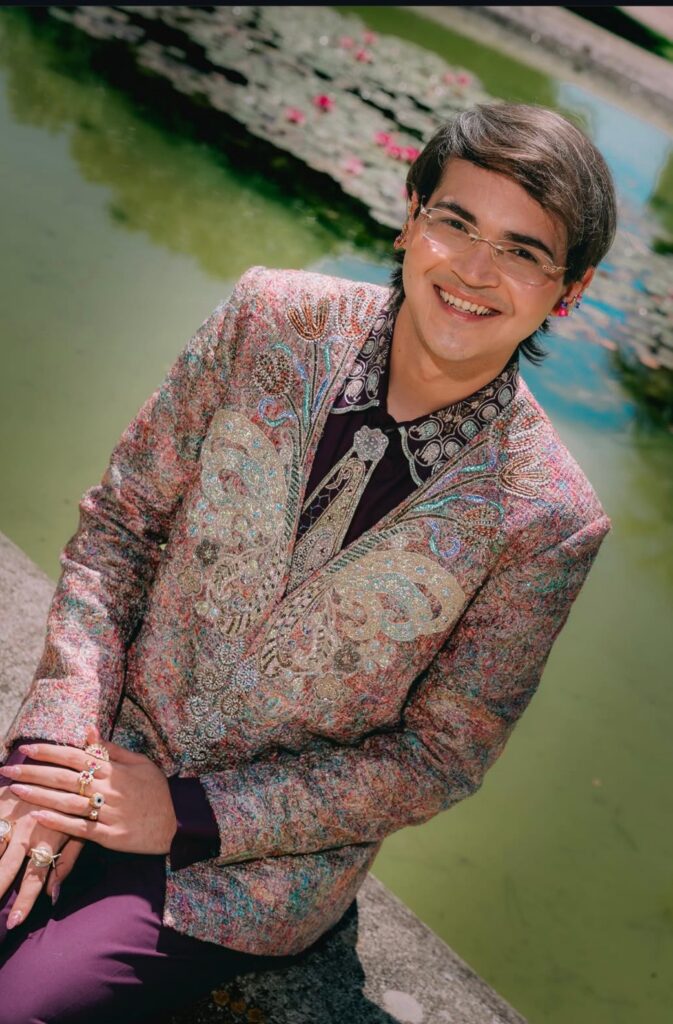
Finally, there was the fashion commentator who became the story. A multicoloured embroidered bandhgala blazer — alive with iridescent threadwork in mauve, teal, and gold — was paired with plum trousers and a galaxy of statement rings. Frameless glasses added restraint to the visual richness, while the smile carried a different message altogether: I dressed for myself first. At Cannes, where everyone performs for someone, that may be the most radical statement of all.
“The Riviera didn’t dress them. They dressed the Riviera.”
Events
Fashion Designer Amit GT and Le Marquise Jewellery by Jasmine Gulati Jain and Sambhav Jain Showcase Excellence Under the Golden Lumière Awards at the 79th Festival de Cannes 2026 Show Directed by Liza Varma
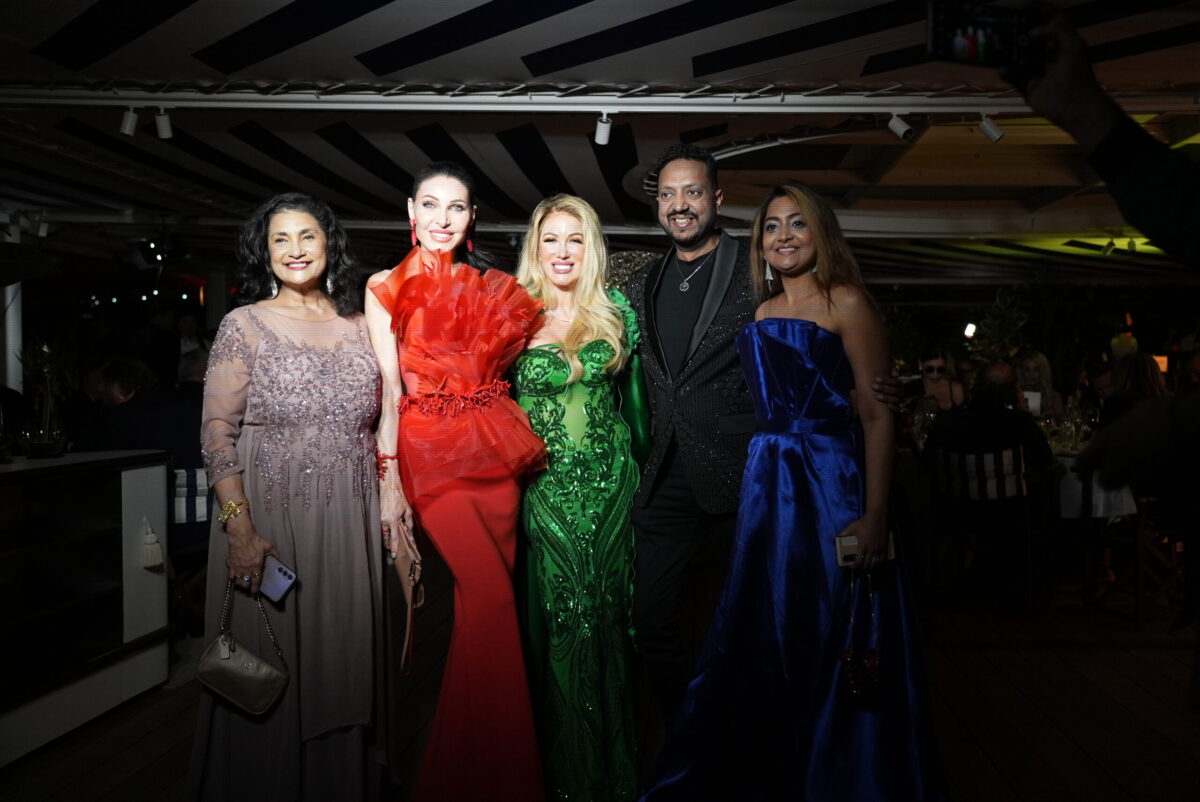
As part of India’s multi-platform presence at the 79th Festival de Cannes 2026, internationally renowned Show Director Liza Varma from India led a delegation of Indian designers and jewellery labels at the Fashion TV Presentation held on 18th May 2026 at the Majestic Hotel, Cannes, at 9:30 PM (CEST).
The showcase featured celebrated Indian designer Amit GT along with Le Marquise Jewellery by Jasmine Gulati Jain and Sambhav Jain, presenting a curated display of fashion and jewellery that reflected contemporary Indian design sensibilities on an international platform. Amit GT’s showcase was presented under the prestigious Golden Lumière Awards Cannes 2026, hosted at the Majestic Hotel Beach, Cannes.
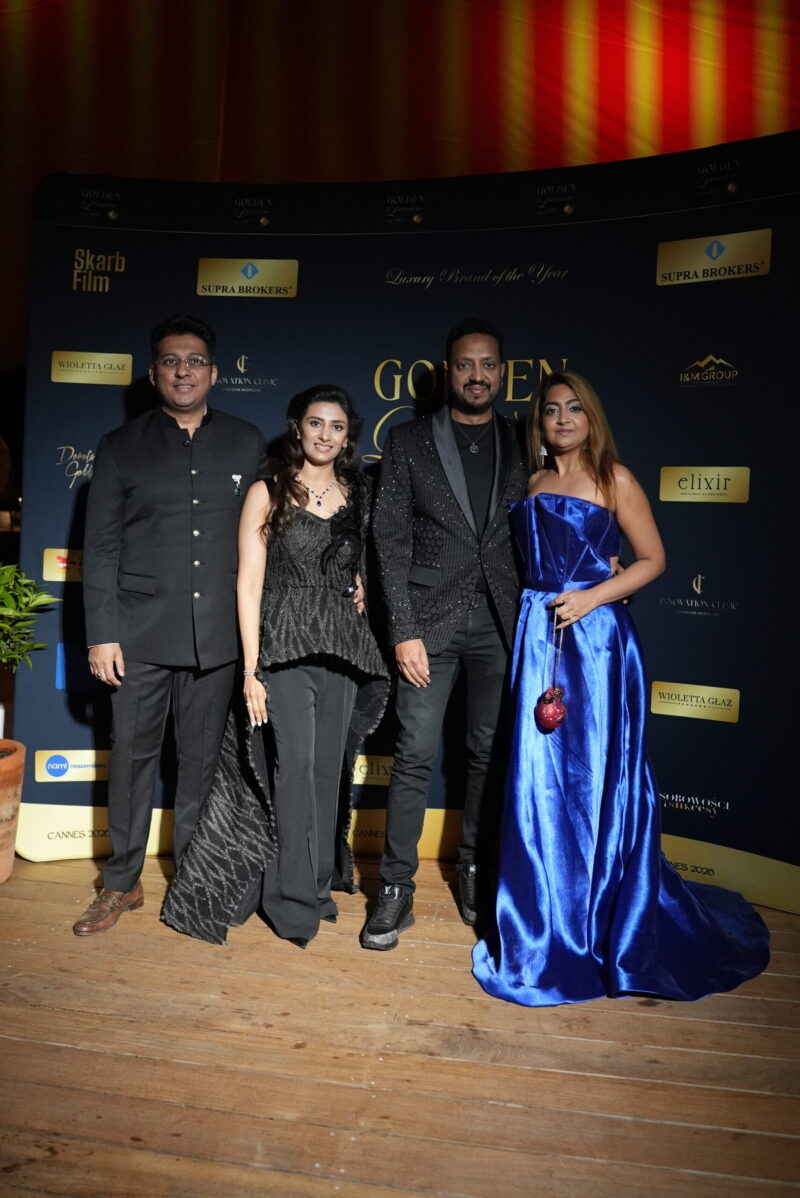
The Golden Lumière Awards show is hosted at the Majestic Hotel Beach, Cannes2026, where cinema meets luxury, celebrating outstanding personalities from international cinema along with visionary business leaders supporting art, culture, cinema, and the future generation of creators. The grand evening was attended by international personality Farhana Bodi and actress Urvashi Rautela, while actress Pooja Batra. The event was produced by Anna Neneman from ENW Showroom.

Speaking about the showcase, Liza Varma said, “My focus is to create opportunities for Indian designers and talent to present their work in international environments. Cannes provides an important global platform to showcase the strength of Indian fashion, craftsmanship, and creative talent before an international audience.”
Held alongside the 79th edition of the Cannes Film Festival 2026, the presentation formed part of a larger initiative led by Liza Varma to create global visibility for Indian designers, jewellery labels, and creative talent through curated showcases and international collaborations at Cannes.

Baby Forest Maasoom Petika: A Thoughtful Ayurvedic Baby Care Gift for First Raksha Bandhan

Birla Cellulose’s Handloom Initiative Brings New Possibilities for Traditional Weaving

EAW Global Aqua Expo 2026 Inaugurated at Bharat Mandapam; Water Leaders Convene to Shape India’s Water Future







An Evening of Healing, Hope, and Humanity: The Healing Brush Unveiled at Delhi Golf Club

Meltdown Proof: How to Protect Your Skin from India’s Ultimate Summer

Baby Care Essentials Every Parent Needs This Summer

Star-Studded Premiere of Bharat Bhagya Vidhat

Beyond Silence: A Smarter Way to Meditate

Masters of the Universe Review: A Triumphant Return to Eternia

 Events8 years ago
Vandy Mehra & Dr. Sanjana Jon hosted a fashionable evening

 Celebrities2 years ago
VOGUE EYEWEAR UNVEILS ‘KEEP PLAYING’, AN EFFERVESCENT CAMPAIGN WITH BRAND AMBASSADOR
 Lifestyle2 years ago
Aza Fashions Launches Flagship Store in Dhan Mill, New Delhi

 Celebrities2 years ago
Sony AATH is premiering the 4th Gopal Bhar movie titled ‘Gopaler Buddhi

 Business9 years ago
Uber and Lyft are finally available in all of New York State

 Health & Beauty2 years ago
The Face Shop Unveils the Vitamin Lip Sleeping Mask: A Revolution in Lip Care

 Celebrities2 years ago
Appu gives meaningful message in country’s first 4K animated

 Lifestyle2 years ago
2025 Numerology Predictions by Tarot Reader Sangeeta Walia