
Events
Sustainable Wellness – Embracing Eco-Friendly Health Practices


Incorporating sustainability into wellness initiatives provides long-term benefits for employees and the planet. Whether it’s switching to refillable beauty products or using energy-efficient lighting in fitness facilities, these changes can make a significant difference. Additionally, embracing more natural forms of exercise such as hiking or biking can reduce the use of resources while promoting a healthy mind and body.
Educating about sustainability also helps employees understand the interconnectedness of different aspects of well-being. For example, thriving involves the individual’s relationship with nature and can be measured by an ecological footprint. A more holistic approach to well-being also considers the relationships between a company and its employees, which can be measured by a social return on investment (SROI).
By incorporating sustainability into wellness programs, businesses can promote healthier lifestyles in an environmentally friendly way. These programs can help employees make better choices about the food they eat and the fitness equipment they buy, as well as how they use water and electricity at home. This approach is especially important as global temperatures rise, and people need to be more conscious of the impact their daily actions have on the environment.
Increasingly, people are looking for ways to combine wellness and sustainability by choosing eco-friendly products and services. For example, more people are seeking outdoor activities such as yoga and mindfulness meditation that allow them to connect with nature and relax. They may also opt for organic and all-natural skincare and makeup products, as these are kinder to the environment than their synthetic counterparts.
Companies that embrace wellness and sustainability can improve employee retention and attract candidates who value corporate responsibility. They can also develop more cost-effective strategies that deliver a stronger ROI by leveraging digital tools to reduce the need for physical resources.
In addition, incorporating environmental considerations into wellness programs can help companies meet regulatory compliance requirements and create a more positive workplace culture. It’s essential for leadership to endorse wellness and sustainability initiatives, as this sets the tone for employees. This may include providing financial incentives for using public transportation or encouraging carpooling to reduce the carbon footprint from commuting to work.
By focusing on both wellness and sustainability, businesses can offer a more comprehensive employee benefit package. This can help them attract and retain top talent while reducing healthcare costs and boosting productivity. In the future, more and more companies will begin to realize that wellness and sustainability are two sides of the same coin.
To ensure success, it’s vital to involve stakeholders in the development of wellness and sustainability programs. Involving employees in the planning process allows them to share their concerns and ideas, which can shape the programs’ outcomes. Involving stakeholders also ensures that the goals and objectives of these programs are aligned with the company’s overall environmental sustainability targets. Finally, it’s crucial to track and measure the results of these programs to show the positive impact they have on the environment.



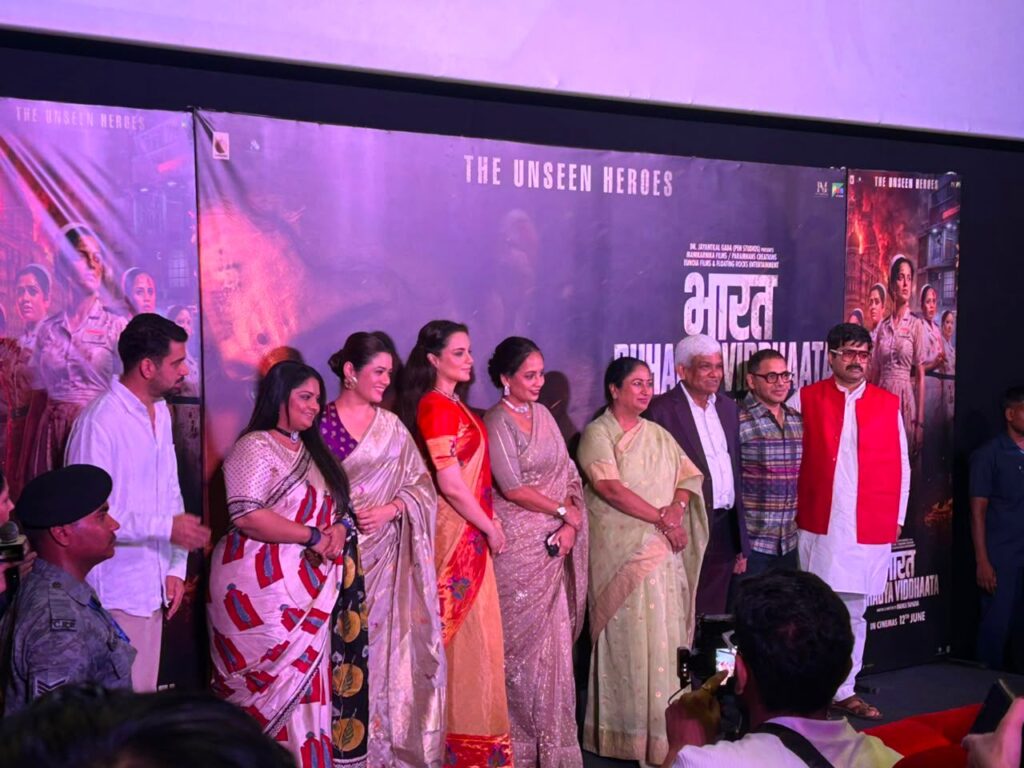
Written and directed by Manoj Tapadia and presented by PEN Studios in association with Manikarnika Films, Bharat Bhagya Vidhata is scheduled for theatrical release on June 12, 2026. Inspired by true events during the horrific 2008 Mumbai terror attacks, the film shifts attention away from conventional depictions of tragedy and instead illuminates the extraordinary actions of ordinary individuals working within Mumbai’s Cama Hospital. At its heart lies a powerful tribute to nurses, ward boys, security personnel, and hospital staff whose bravery ensured the safety of hundreds of patients during one of India’s darkest nights.

Kangana Ranaut leads the film as a senior nurse inspired by the real-life heroism of Anjali Kulthe, delivering a performance rooted in determination and quiet strength. Supporting her is an accomplished ensemble featuring Girija Oak, Smita Tambe, Amrutha Namdev, Esha Dey, Suhita Thatte, and several others, each contributing meaningfully to a narrative that intentionally avoids portraying heroism as the achievement of a single individual. Instead, the film emphasises collective courage, illustrating how every member of the hospital staff became an indispensable part of a larger effort to protect vulnerable lives.

Without venturing into spoiler territory, Bharat Bhagya Vidhata succeeds in immersing viewers in the tension and uncertainty of the situation. The screenplay maintains a commendable pace, ensuring that the emotional weight never overwhelms the narrative momentum. More importantly, the film serves as a timely reminder of the often-unrecognised contributions of nursing staff and hospital attendants. In moments of catastrophe, while doctors shoulder immense responsibility in critical care and decision-making, nurses and support workers are the constant presence, managing countless essential tasks that keep an institution functioning.
Beyond the screening itself, the premiere offered valuable insights into the filmmaking process. The evening was marked by a lively atmosphere, with extensive media interactions, cast interviews, and behind-the-scenes discussions. Members of the cast and crew shared their experiences portraying real-life events, the challenges of balancing historical sensitivity with cinematic storytelling, and the responsibility of representing individuals whose bravery largely went unrecognized by the public. These conversations provided a fascinating glimpse into the creative and emotional investment that shaped the production.
Perhaps the film’s greatest achievement lies in its ability to honour heroism without romanticising tragedy. In doing so, Bharat Bhagya Vidhata transforms a familiar chapter of history into a moving tribute to those whose actions saved lives but whose stories rarely occupied the spotlight. Combining emotional depth, strong performances, and a deeply respectful approach to its subject matter, the film stands as both an engaging drama and a deserving tribute to everyday heroes who became extraordinary when circumstances demanded it.


CROISETTE CHRONICLES — PART II
“Sun, Silk & Studied Chaos”
If the first week of Cannes 2026 whispered, the second week grabbed you by the collar.
A blush-pink strapless column gown arrived on the Croisette with the kind of quiet ferocity only a seasoned red carpet can absorb. Pearl-scattered at the bust, its satin surface caught every camera flash. It was paired with a voluminous silver-grey cocoon coat draped off both shoulders — not worn, deployed. Chandelier diamonds framed the ears, stacked rings adorned both hands, and sleekly pulled-back hair revealed a razor-sharp jawline. This was old Hollywood reconstructed by someone who found the original too polite.

Then came the moment that stopped the Croisette mid-scroll: a chartreuse pleated one-shoulder gown, its fabric engineered into deep diagonal ridges sweeping from a sculpted shoulder down to a dramatic thigh-high slit. Photographed against palm trees and Mediterranean light, it looked less like an outfit and more like a natural phenomenon — moss-coloured, elemental, inevitable. A single emerald pendant rested at the throat. Loose waves, barely tamed, completed the look. The overall effect? A woman who dressed for the landscape, not the photographers — and somehow captivated both.
Beside the sea, another story unfolded. A dark sequinned gown — midnight black fading into deep magenta — was worn against the backdrop of open water. Hair loosened by the wind, a glance thrown back over one bare shoulder. Delicate crystal chains descended the open back like jewellery transformed into architecture. No carpet, no crowd. Just Riviera light and the confidence to command it entirely.

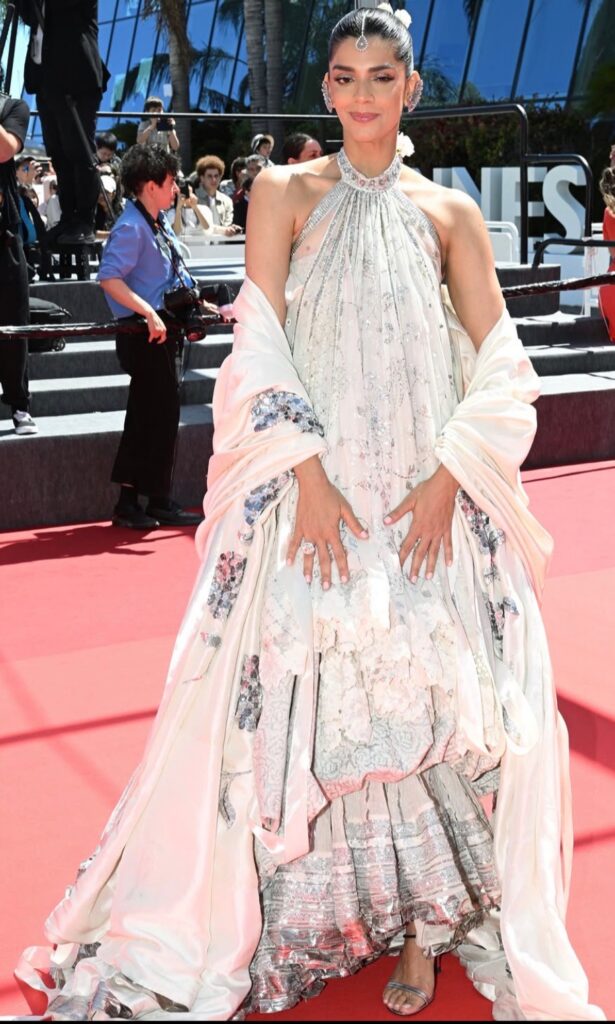
Then came the cultural statement that deserved its own paragraph: a halter-neck anarkali of extraordinary intricacy. Silver and blush floral embroidery spread across ivory silk, while a heavily diamond-encrusted halter neckline functioned as both collar and jewel. A maang tikka and oversized jhumkas completed a look worthy of museum display. A blush dupatta trailed behind with quiet drama. This was Indian couture presented not as a translation for a Western audience, but entirely on its own terms — unapologetic, uncompromising, and self-assured.
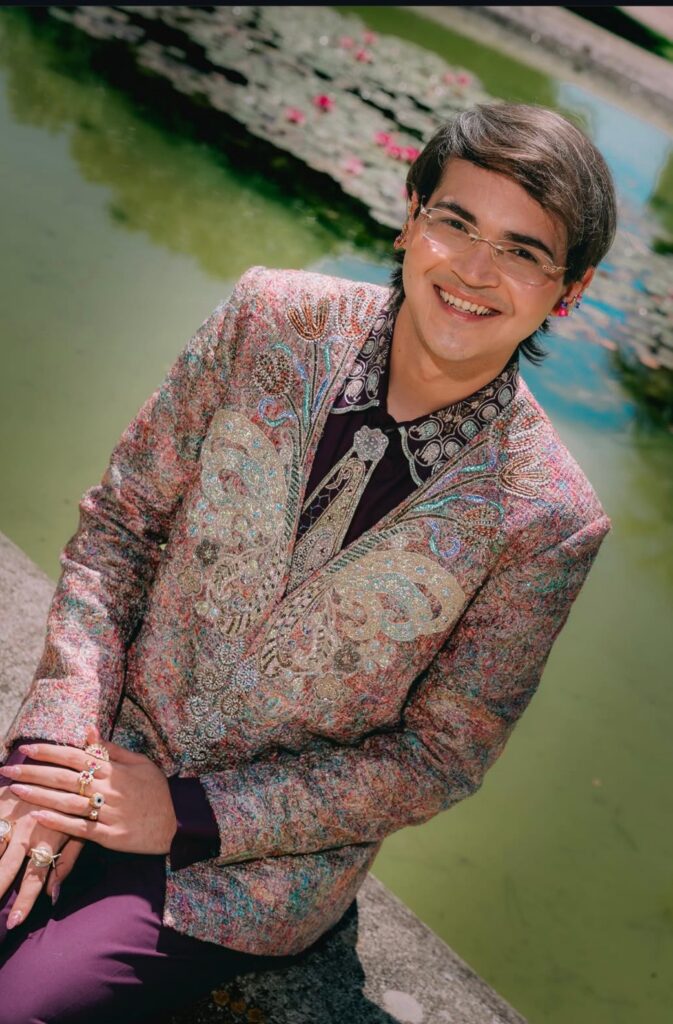
Finally, there was the fashion commentator who became the story. A multicoloured embroidered bandhgala blazer — alive with iridescent threadwork in mauve, teal, and gold — was paired with plum trousers and a galaxy of statement rings. Frameless glasses added restraint to the visual richness, while the smile carried a different message altogether: I dressed for myself first. At Cannes, where everyone performs for someone, that may be the most radical statement of all.
“The Riviera didn’t dress them. They dressed the Riviera.”
Events
Fashion Designer Amit GT and Le Marquise Jewellery by Jasmine Gulati Jain and Sambhav Jain Showcase Excellence Under the Golden Lumière Awards at the 79th Festival de Cannes 2026 Show Directed by Liza Varma
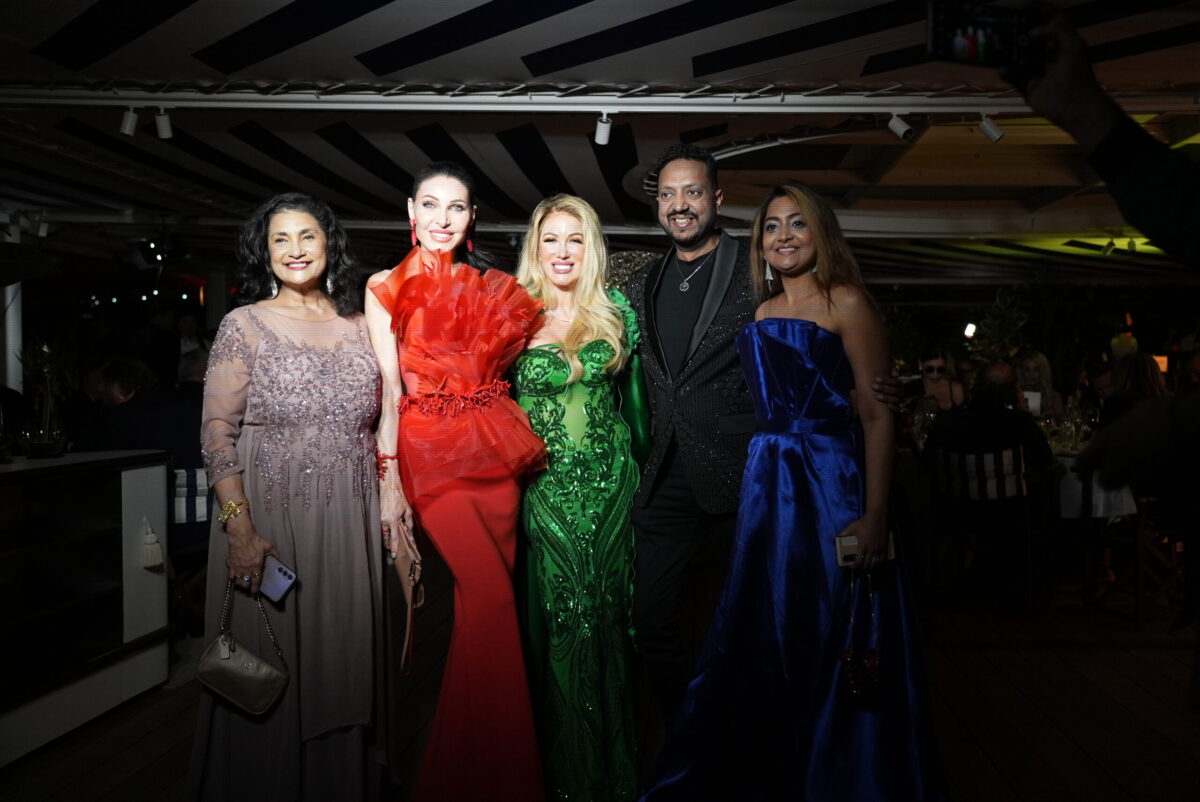
As part of India’s multi-platform presence at the 79th Festival de Cannes 2026, internationally renowned Show Director Liza Varma from India led a delegation of Indian designers and jewellery labels at the Fashion TV Presentation held on 18th May 2026 at the Majestic Hotel, Cannes, at 9:30 PM (CEST).
The showcase featured celebrated Indian designer Amit GT along with Le Marquise Jewellery by Jasmine Gulati Jain and Sambhav Jain, presenting a curated display of fashion and jewellery that reflected contemporary Indian design sensibilities on an international platform. Amit GT’s showcase was presented under the prestigious Golden Lumière Awards Cannes 2026, hosted at the Majestic Hotel Beach, Cannes.

The Golden Lumière Awards show is hosted at the Majestic Hotel Beach, Cannes2026, where cinema meets luxury, celebrating outstanding personalities from international cinema along with visionary business leaders supporting art, culture, cinema, and the future generation of creators. The grand evening was attended by international personality Farhana Bodi and actress Urvashi Rautela, while actress Pooja Batra. The event was produced by Anna Neneman from ENW Showroom.

Speaking about the showcase, Liza Varma said, “My focus is to create opportunities for Indian designers and talent to present their work in international environments. Cannes provides an important global platform to showcase the strength of Indian fashion, craftsmanship, and creative talent before an international audience.”
Held alongside the 79th edition of the Cannes Film Festival 2026, the presentation formed part of a larger initiative led by Liza Varma to create global visibility for Indian designers, jewellery labels, and creative talent through curated showcases and international collaborations at Cannes.

Baby Forest Maasoom Petika: A Thoughtful Ayurvedic Baby Care Gift for First Raksha Bandhan

Birla Cellulose’s Handloom Initiative Brings New Possibilities for Traditional Weaving

EAW Global Aqua Expo 2026 Inaugurated at Bharat Mandapam; Water Leaders Convene to Shape India’s Water Future







An Evening of Healing, Hope, and Humanity: The Healing Brush Unveiled at Delhi Golf Club

Meltdown Proof: How to Protect Your Skin from India’s Ultimate Summer

Baby Care Essentials Every Parent Needs This Summer

Star-Studded Premiere of Bharat Bhagya Vidhat

Beyond Silence: A Smarter Way to Meditate

Masters of the Universe Review: A Triumphant Return to Eternia

 Events7 years ago
Vandy Mehra & Dr. Sanjana Jon hosted a fashionable evening

 Celebrities2 years ago
VOGUE EYEWEAR UNVEILS ‘KEEP PLAYING’, AN EFFERVESCENT CAMPAIGN WITH BRAND AMBASSADOR

 Lifestyle2 years ago
Aza Fashions Launches Flagship Store in Dhan Mill, New Delhi

 Celebrities2 years ago
Sony AATH is premiering the 4th Gopal Bhar movie titled ‘Gopaler Buddhi

 Business9 years ago
Uber and Lyft are finally available in all of New York State

 Health & Beauty2 years ago
The Face Shop Unveils the Vitamin Lip Sleeping Mask: A Revolution in Lip Care

 Celebrities2 years ago
Appu gives meaningful message in country’s first 4K animated

 Lifestyle2 years ago
2025 Numerology Predictions by Tarot Reader Sangeeta Walia